
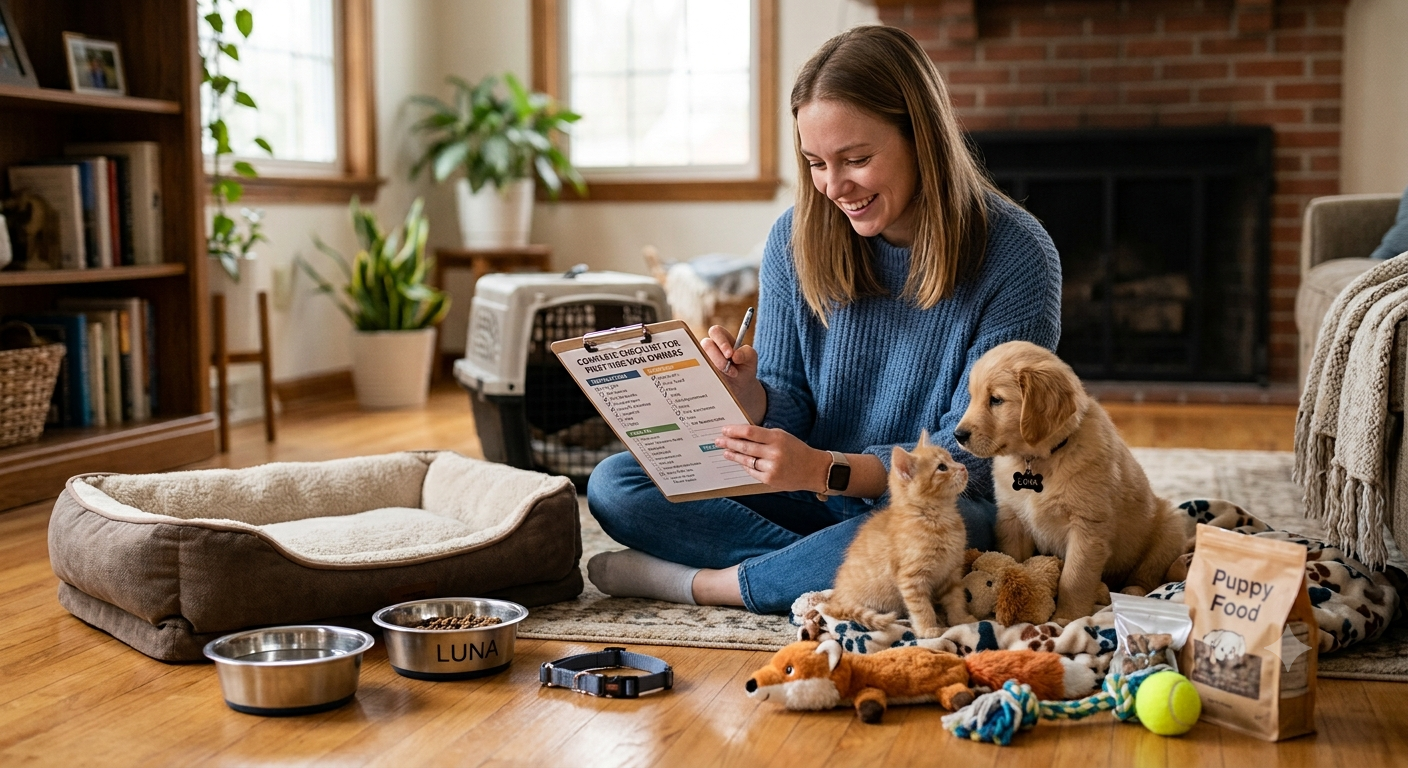
Complete Checklist for First-Time Dog Owners
Bringing a dog into your home is rewarding but requires planning. This checklist covers the practical essentials—supplies, health, training and daily routines—to help you start confidently.
Read each section and use the checklist at the end to make sure nothing important is missed before your new dog arrives.
1. Preparing your home
Make a safe, comfortable space where your dog can relax and sleep. Puppy-proof low cabinets, secure loose wires and remove hazards like toxic plants or small objects. For small breeds and cats who meet new dogs, consider a carrier or safe transfer option when traveling or visiting the vet: dog carriers.
2. Essential supplies to buy first
Start with these basics to meet daily needs and safety:
- Sturdy collar with ID tag and a secure leash.
- Water and food bowls placed in a consistent spot.
- Comfortable bed and crate (if crate training).
- Durable toys and safe chews for mental stimulation.
Choose a well-fitted collar for daily wear and a separate collar or harness for walks—shop options like dog collars to find styles that match size and activity level.
3. Feeding and nutrition
Pick food appropriate for age, size and health. Puppies need higher-calorie, nutrient-dense formulas; adult and senior dogs have different needs. Ask your vet for brand and portion guidance.
Along with high-quality food, a basic supplement lineup can help some dogs—especially during growth or joint issues. Consider keeping vet-recommended dog vitamins on hand to discuss with your veterinarian.
4. Grooming and coat care
Regular grooming prevents mats, reduces shedding and gives you a chance to check skin, ears and nails. Establish a routine early so grooming becomes normal for your dog.
Basic tools: slicker or bristle brush, comb, nail clippers and dog-safe shampoo. Pick a brush suited to your dog’s coat type—short, long, curly or double-coated. See grooming tools like dog brushes to match brush type to fur texture.
5. Paw care and seasonal protection
Paws are vulnerable to cuts, ice-melt chemicals, hot pavement and allergens. Check paw pads regularly, keep nails trimmed and remove debris between toes after walks.
For winter and rough terrain, have basic paw-care items ready—balms, gentle cleansers and protective booties. For routine supplies and balms, explore dog paw care.
6. Training basics and behavior tools
Start training immediately with short, consistent sessions. Focus first on name recognition, sit, recall and loose-leash walking. Positive reinforcement—praise and treats—works best.
Two useful training aids for first-time owners are clicker training and remote or corrective tools when used responsibly. A clicker helps mark correct behaviors clearly; browse effective options like dog clickers. For specific off-leash control or advanced training under guidance, consider dog training collars, but only after researching safe use and discussing with a professional trainer or your vet.
7. Exercise, hydration and outdoor safety
Regular exercise prevents boredom and common behavior problems. Match activity to your dog’s breed and age: short walks and play for puppies, longer runs or hikes for high-energy adults.
Always carry water for walks and outings. Portable water solutions make hydration easy on the go—consider portable dog water bottles for walks, hikes and travel.
8. Travel, socialization and day-to-day logistics
Introduce your dog to car trips, visitors and other pets gradually. Use positive associations—treats and calm praise—to build comfort. A plan for daycare, walks or pet sitters will reduce stress when you work or travel.
Invest in travel gear for safety and convenience: a secure carrier for small dogs, seat harnesses for car rides or a backpack for hands-free outings with medium-to-large dogs. If you plan frequent outdoor adventures, evaluate travel gear alongside everyday supplies.
Quick checklist before bringing your dog home
- Found a veterinarian and scheduled first wellness visit.
- Secure collar, ID tag and microchip information updated.
- Food, bowls, bed, crate and safe toys purchased.
- Grooming tools and first-aid basics available.
- Leash, training clicker and a basic training plan ready.
- Hydration solution for walks (portable water bottle) packed.
- Paw care supplies and vaccination/flea prevention plan discussed with vet.
FAQ
How soon should I see a vet after bringing my dog home?
Schedule a wellness check within the first week. The vet will confirm vaccinations, deworming, microchip registration and advise on flea/tick prevention and diet.
Do I need a crate, and how do I introduce it?
Crates provide a safe den and assist with housetraining. Make the crate inviting with bedding and treats. Start with short, positive sessions—never use the crate for punishment.
When should I start training and socialization?
Begin socialization and basic training as soon as vaccinations allow for safe interactions. Use short, frequent sessions and reward-based methods to build good habits early.
What grooming tasks should I do at home versus a professional?
Weekly brushing, ear checks and tooth brushing can be done at home. Professional grooming is useful for nail trims, breed-specific haircuts or if your dog is difficult to handle during grooming.
How many walks does my dog need each day?
Needs vary by age and breed. Most dogs benefit from two daily walks plus play sessions. Puppies require shorter, more frequent outings to match energy and attention span.
What should I pack for a vet visit or emergency?
Bring vaccination records, a list of current foods and supplements, your dog’s microchip number, and any recent behavior or health notes. Keep emergency contact numbers handy.
Conclusion
Preparation makes the first weeks with a new dog less stressful for both of you. Use the checklist, set up routines early, and contact your vet or a trainer if questions arise. Small, consistent actions—daily walks, short training sessions and regular grooming—build a healthy, happy relationship.
