
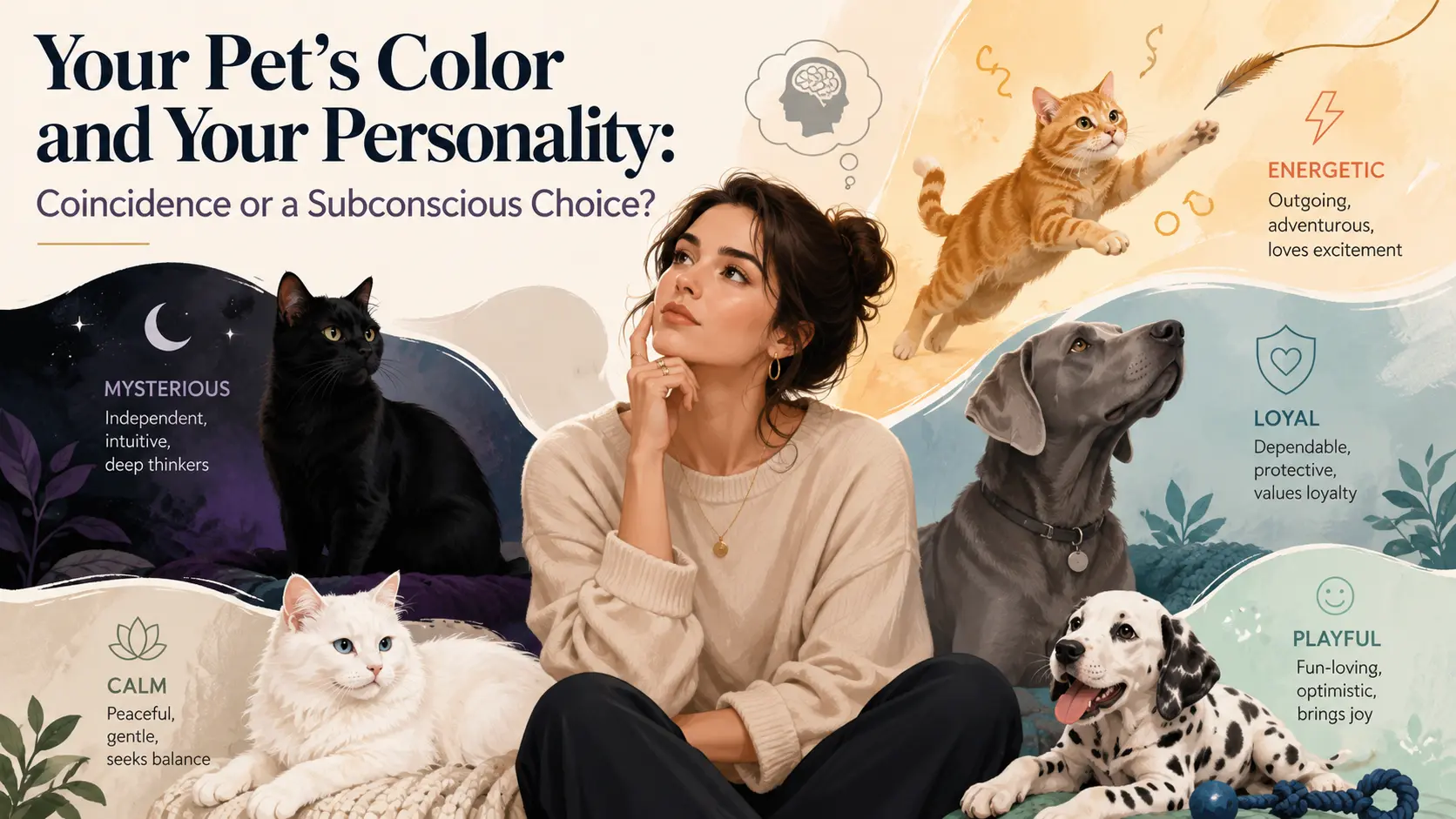
Your Pet’s Color and Your Personality: Coincidence or a Subconscious Choice?
When you picture your ideal pet, do you see a sleek black cat, a golden retriever, or a tuxedo kitty? Many owners report an immediate visual preference—and sometimes that choice feels more than skin-deep. Is pet color linked to personality, or are we projecting our traits onto a furry canvas?
This article looks at the psychology and science behind color preferences, what research actually supports, and practical care and enrichment tips that match both pet temperament and coat. Use this as a practical guide to make deliberate choices rather than fall for unconscious patterns.
How color choices form: instinct, culture, and aesthetics
Color preferences arise from a mix of instinct, cultural association, and pure aesthetics. Humans have evolved to make rapid judgments based on visual cues—sometimes associating darker coats with perceived strength or lighter coats with gentleness. Cultural media—movies, memes, social expectations—reinforce these impressions.
On top of that, individual experience matters: if your childhood dog was a calm brown Labrador, you may unconsciously seek similar colors because they remind you of safety. Those preferences can shape the types of pets you meet and bond with, even before behavior is assessed.
What the research actually says
Scientific studies on coat color and temperament show mixed results. Some research points to small correlations in specific populations (for example, certain behavioral tendencies in particular breeds), but large-scale, breed-controlled studies often find no reliable causal link between coat color and personality.
Important factors that consistently predict behavior are genetics (breed tendencies), early socialization, training, and the owner’s handling patterns. Color may influence first impressions and adoption choices, but it is rarely a direct determinant of temperament.
Cats: color myths vs. real patterns
People commonly claim that black cats are independent, orange cats are friendly, or calicos are sassy. While anecdotal trends exist, they are not universal. Many behavioral differences attributed to color actually trace back to sex-linked genetics (for example, calico and tortoiseshell patterns are usually female) and the environments those cats experienced.
Regardless of coat, indoor enrichment and feeding choices shape behavior. For bored indoor cats, interactive play reduces stress and problem behaviors—look for engaging options from the Interactive Cat Toys category to encourage activity and confidence.
Nutrition affects mood and energy, too. Choosing appropriate diets—like limited-ingredient or grain-free options when recommended—can help sensitive cats thrive; see the Grain Free Cat Food category for specialized formulas that may suit picky or diet-sensitive felines.
Dogs: color-based stereotypes and training reality
Dog color stereotypes are common: black dogs are “intimidating,” white dogs are “fragile,” and merle patterns are “unique.” These impressions can affect adoption rates and owner expectations. However, temperament is shaped far more by genetics, early socialization, and consistent training than by coat shade.
A deliberate training plan is the strongest predictor of a reliable dog. Tools like structured training collars can help manage behavior when used responsibly and under guidance. If you’re working on recall or boundary training, consider options in the Dog Training Collars category as part of a broader training strategy with positive reinforcement.
Owner bias and self-fulfilling prophecies
One of the clearest mechanisms linking color and personality is owner bias. If you expect a black dog to be aggressive, you may treat them more cautiously or restrict social exposure—behavior that can make a dog anxious or reactive. Conversely, a perceived “cute” coat might lead to permissive behavior that encourages poor manners.
Be aware of your initial expectations and test them: spend time observing how a pet behaves in neutral settings, and let behavior—not color—inform your long-term decision. If you need to transport or acclimate a new pet, choose carriers that reduce stress; for small dogs and cats, reliable options are available in the Cat Carriers and Dog Carriers categories depending on the species.
Grooming and coat-specific care
Different coat colors and types require specific maintenance routines. Dark, short coats can hide fading sun damage or pests; light coats can show dirt and staining more easily. Long or dense coats need regular brushing to prevent mattes regardless of color.
Use appropriate tools: regular brushing reduces shedding and distributes natural oils—see the selection in the Dog Brushes category for durable brushes suited to different coat lengths. For paw protection and seasonal care, items in the Dog Paw Care category can prevent cracks or irritation that might otherwise alter a dog’s gait or activity level.
Enrichment, travel, and practical gear
Color shouldn’t dictate activity needs—match gear and enrichment to the dog or cat’s energy and temperament. For outdoor adventures with an energetic pup, a well-fitted daypack lets them carry water and essentials and can increase focus on walks; check the Dog Backpacks category for sturdy options.
Hydration and accessible water reduce stress for both indoor and outdoor pets. Cats in particular often prefer moving water; fountains can increase intake and reduce urinary issues—explore choices in the Cat Water Fountains category to find quiet, flowing options suited to skittish drinkers.
Quick checklist: Choosing a pet beyond color
- Assess breed tendencies and energy level first, then color.
- Spend time with the animal in neutral settings to observe true temperament.
- Plan training and socialization before bringing the pet home.
- Match grooming tools and paw care to coat type and lifestyle.
- Choose enrichment and travel gear that fits activity needs, not colors.
FAQ
- Does coat color determine how friendly a pet will be? No—friendliness is shaped primarily by genetics, socialization, and owner interaction, not color alone.
- Are some colors harder to care for? Not inherently—coat length and texture are the main care drivers. Light coats may show dirt more; dark coats may hide skin issues.
- Can my expectations change my pet’s behavior? Yes—owner behavior influences pets heavily. Expecting certain traits can lead to treatment that reinforces those traits.
- Should I choose gear based on my pet’s color? No—choose gear based on fit, comfort, and function. For travel and hikes, consider a dog pack rather than choosing by color.
- Are there proven links between color and disease? Rarely. Some patterns (like merle genetics) are linked to specific health concerns, but color alone is an unreliable disease predictor.
Conclusion: A practical takeaway
Color may influence first impressions, but temperament is a product of genetics, socialization, and care. Make decisions based on behavior, needs, and lifestyle fit. Use well-chosen tools—appropriate brushes, paw care, enrichment toys, carriers, and training resources—to support the pet you have, regardless of coat color.
